

Rupture Of Membranes (Water Breaking)
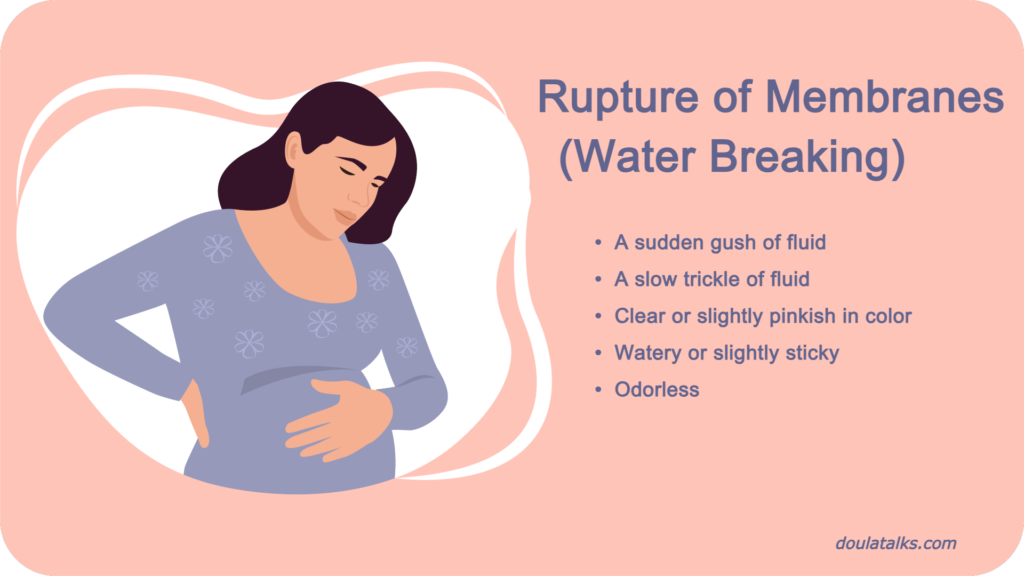
Knowing When It’s Time: When to Head to the Hospital for Labor Epidural: What It Is, Procedure, Risks & Side Effects Pitocin: What It Is, Procedure, Risks & Side Effects I’m a Doula: This Is What a Doula Does VBAC (Vaginal Birth After Cesarean) Pain Management During Labor Induced Labor Preparing a Birth Preferences Document (Birth Plan) Natural Ways to Manage Labor Contractions Rupture Of Membranes (Water Breaking) By Liat Salomon, doula February 27, 2024 Share on In This Article: Water breaking signs What does water breaking look like? Water breaking vs discharge or urine Should I go to the hospital as soon as my water breaks, even with no contractions? Does it hurt when your water breaks? Artificially rupturing the amniotic sac How long after my water breaks will I deliver? Mucus plug Water breaking during labor is a term used to describe the rupturing of the amniotic sac, which contains the fluid that surrounds and protects the developing fetus in the uterus. When the amniotic sac ruptures, the fluid inside it may leak out of the vagina, which is commonly referred to as “water breaking”. In most cases, the water breaking is a natural part of the labor process and occurs as the body prepares for delivery. However, in other cases, the amniotic sac may rupture before the labor actually begins. There is no set level of cervical dilation that a woman must reach before her water breaks. In fact, a woman’s water can break at any point in the pregnancy, including before labor has even started. The timing of the water breaking is influenced by a variety of factors, including the baby’s position, the amount of amniotic fluid present, and the strength of the amniotic sac. Once the water breaks, labor typically begins within a few hours. If the water is clear and does not have a greenish tint in it (this tint is known as meconial water), you can stay home and wait for contractions to begin. Drinking a lot of fluids is recommended, and I would add a recommendation to sleep/rest to be prepared to manage contractions when they start. Once there are a few more signs that labor is progressing, including a good pattern of contractions (see more information in “Knowing when it’s time: when to head to the hospital for labor”), you should start heading to the hospital. When the water breaks, the amniotic sac that protects and surrounds the baby ruptures, which means that the baby is no longer protected from the outside environment. This can increase the risk of infection, which is why healthcare providers generally recommend that women give birth within 24 hours after their water breaks. However, it’s important to note that the risk of infection depends on several factors, including the woman’s and baby’s overall health, whether there were any complications during pregnancy or labor, if the woman is positive for Group B Streptococcus (GBS), and how long it has been since the water broke. If you are being responsible, taking your temperature every two hours, not going into a tub, and minimizing vaginal exams, the risk of infection is lower. If the woman has not gone into labor within 24 hours of the water breaking, healthcare providers may recommend an induction of labor or other interventions to help speed up the process and reduce the risk of infection. It is OK to keep asking if there is a true subjective need for you to be induced or is it just following protocol. If it is a protocol-based recommendation, you can decide to continue waiting for birth to begin. While waiting, continue drinking, checking your temperature, and paying attention to the baby’s movements. Water breaking signs The signs of water breaking during labor can vary from woman to woman. Some common signs that may indicate that the amniotic sac has ruptured and the water has broken include: A sudden gush of fluid This is the most obvious sign of water breaking, and it can be a significant amount of fluid that soaks through your clothing and onto the floor. A slow trickle of fluid In some cases, the fluid may leak out slowly over time, so you may feel dampness in your underwear or notice a steady trickle of fluid. A sensation of warmth or wetness You may feel a sudden sensation of warmth or wetness in your vaginal area. It’s important to note that not all women experience the same signs of water breaking. Some women may not notice any signs at all, while others may experience a combination of the above signs. When the amniotic sac ruptures, the fluid might leak out of the vagina slowly, which can be mistaken for urine or increased vaginal discharge. The leakage may be continuous or intermittent and may be accompanied by a feeling of wetness or dampness. It is important to be aware of the signs of a slow leak of amniotic fluid, as it may increase the risk of infection and may require medical attention. Signs of a slow leak may include: A sudden increase in vaginal discharge A persistent feeling of wetness in the vaginal area A strong odor to the fluid, which may indicate infection A change in the color or consistency of the fluid, which may also indicate infection What does water breaking look like? In most cases, the water breaking looks like a clear, odorless fluid that comes out of the vagina. However, the color and consistency of the fluid can vary depending on several factors, including the stage of labor, the baby’s position, and the woman’s health.Here are some common characteristics of the fluid that may come out when the water breaks: Clear or slightly pinkish in color In most cases, the fluid is clear or slightly tinged with pink, which is a sign of normal fetal blood circulation. Watery or slightly sticky The fluid is usually thin and watery, although it may be slightly sticky or mucus-like. Odorless Amniotic fluid is
Rupture Of Membranes (Water Breaking) Read More »