

I’m a Doula: This Is What a Doula Does
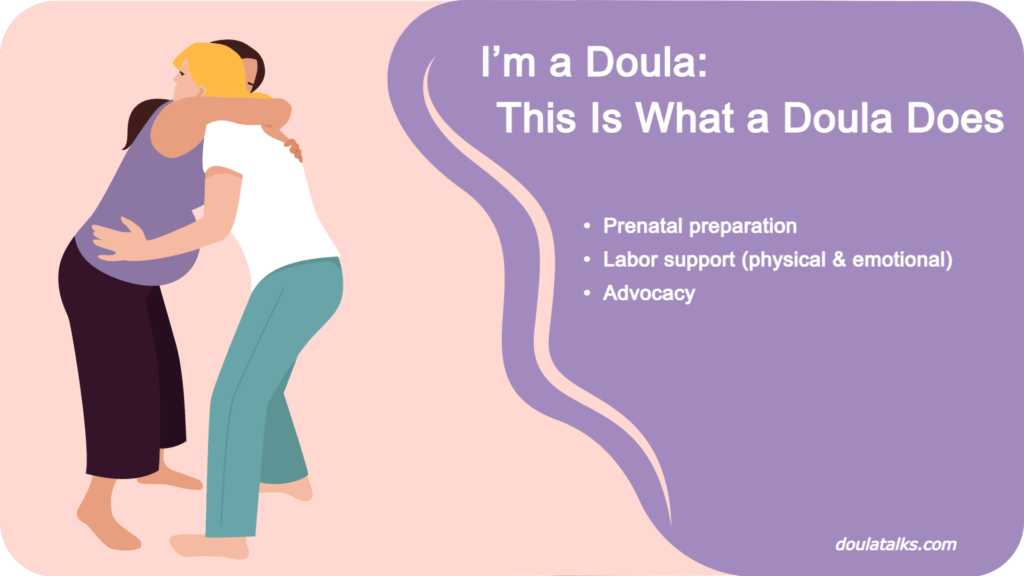
Natural Ways to Manage Labor Contractions Knowing When It’s Time: When to Head to the Hospital for Labor Pitocin: What It Is, Procedure, Risks & Side Effects Rupture Of Membranes (Water Breaking) VBAC (Vaginal Birth After Cesarean) Epidural: What It Is, Procedure, Risks & Side Effects Breech Baby Preparing a Birth Preferences Document (Birth Plan) Pain Management During Labor Induced Labor I’m a Doula: This Is What a Doula Does Choosing to be a doula is not a career decision. It is a calling. Being there for women when they are doing the most primal and basic of things — bringing another human being into the world — is definitely not a “day job.” By Liat Salomon, doula February 27, 2024 Share on In This Article: So what IS a doula? What services does a doula provide? What are the advantages of having a doula? Doula certifications What is the difference between a doula and a midwife? Choosing the right doula for you Doulas are for partners, too! I can’t say that being a doula was my childhood dream — primarily because I never heard of a doula growing up. All the birth stories I heard had the words “hospital”, “doctor”, and “pain” in them. Never anything else. I can’t even say that it was my dream career when I was in my twenties: I worked as a journalist/news editor and loved it. But then life happened, as it usually does. The birth of my first child was wonderful. Really. It wasn’t easy, but I felt so great after, so when I went in to give birth the second time, I had no doubt it would be the same. Except it was not. Looking back on both births, I realized that the key difference was that I didn’t have Valerie with me the second time. Valerie was who I kept looking for to help me go through contractions. I was looking for her massages, her confidence, and guidance — and basically just knowing she was there. It took me nearly three years before I realized that what I wanted to do was “become Valerie.” So what IS a doula? A doula is a Greek word meaning “a woman who serves.” Today, the word doula refers to someone, usually a woman, who supports a person (and their partner) giving birth. The support includes physical, emotional, and mental support before and during labor. Also Read: Epidural: what it is, procedure, risks & side effects Preparing a birth preferences document (birth plan) What services does a doula provide? Not all doulas offer the same service packages but, generally speaking, doulas provide a range of services to support women and their partners during pregnancy, childbirth, and the postpartum period. Some of the services include: Prenatal support A doula can provide emotional and informational support during pregnancy, helping women and their partners prepare for childbirth, answering questions about pregnancy and childbirth, and providing guidance on birth preferences and options. Labor support During labor, a doula provides emotional and physical support to the mother and her partner. This can include providing massage, helping with relaxation and breathing techniques, suggesting different positions, and providing reassurance and encouragement. Advocacy A doula can help advocate for the mother’s wishes and preferences during childbirth, helping to ensure that the mother’s voice is heard and her needs are met. Personally, I feel that my job is to make sure that the birthing person and their partner advocate for themselves by encouraging them to ask A LOT of questions during pregnancy and during the birth — to make sure they always make the right decisions and that their “voice” is heard. Postpartum support Some doulas provide support to the mother and her partner in the postpartum period, such as helping with breastfeeding, providing emotional support, and assisting with newborn care. Overall, doulas can help to create a more positive and empowering birth experience for everyone involved. What are the advantages of having a doula? Numerous studies have confirmed the advantages of having a doula present during childbirth. These studies have shown that having a doula can lead to a range of benefits for the mother, the baby, and the birth experience overall. Here are some examples of the findings: Reduced risk of medical interventions A study published in Birth: Issues in Perinatal Care found that having a doula present during childbirth was associated with a reduced risk of infant mortality and a higher likelihood of spontaneous vaginal delivery. In addition, a Cochrane Review of 26 randomized controlled trials involving more than 15,000 women found that having a doula present during childbirth was associated with a reduced risk of C-section, shorter labors, and reduced use of pain medication. Also, a study published in the Journal of Midwifery & Women’s Health found that women who received continuous labor support from a doula had a lower incidence of fetal distress and were less likely to have their labor augmented with synthetic oxytocin. Shorter labors Studies have shown that women who have the support of a doula during labor tend to have shorter labors, on average, compared to women who do not have a doula present. Improved birth outcomes Research has found that having a doula present during childbirth can lead to improved birth outcomes, such as fewer complications and a lower risk of infant mortality. In addition, having a doula’s support can also help make sure that the baby is born in a more ideal position, which may help in mitigating tears and bruises. Increased satisfaction with birth experience Studies have consistently shown that women who have the support of a doula during childbirth report feeling more satisfied with their birth experience overall. A study published in the Journal of Obstetric, Gynecologic, and Neonatal Nursing found that women who had the support of a doula during childbirth were less likely to have postpartum depression and reported feeling more satisfied with their birth experience. Increased likelihood of breastfeeding Research has found that having a doula
I’m a Doula: This Is What a Doula Does Read More »