

Breech Baby
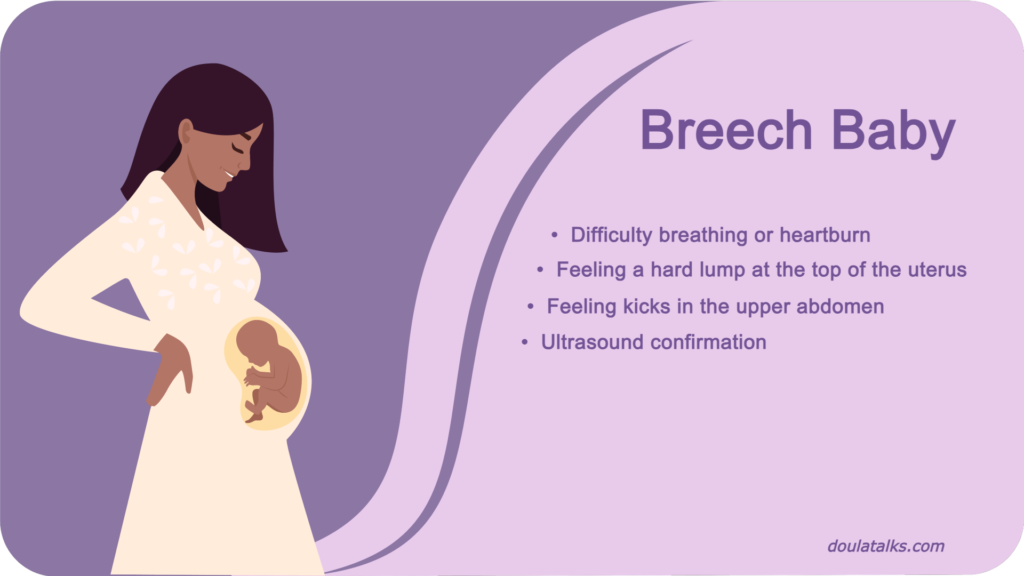
Pain Management During Labor Epidural: What It Is, Procedure, Risks & Side Effects I’m a Doula: This Is What a Doula Does Natural Ways to Manage Labor Contractions Pitocin: What It Is, Procedure, Risks & Side Effects Induced Labor Rupture Of Membranes (Water Breaking) Preparing a Birth Preferences Document (Birth Plan) Breech Baby A breech baby is one of those topics no one feels the need to talk about – until they realize that the baby is not flipping, and by that point it might be a bit late. By Liat Salomon, doula January 2, 2025 Share on In This Article: What is a breech baby? Signs of a breech baby Causes of a breech baby Risks to the baby when delivered in a breech position What is the success rate of delivering breech babies? Are breech deliveries more painful? How does labor start with a breech baby? Breech baby head shape How to turn a breech baby Additional methods for turning a baby in a breech position Sleeping positions to turn breech baby Conclusion What is a breech baby? A breech baby is a term used to describe a baby who is positioned bottom-down (feet or buttocks first) in the mother’s uterus, rather than head-down, which is the normal position for a baby preparing for birth. About 3%-4% of full-term pregnancies result in breech presentation. In most cases, a baby will settle into the head-down position between 32 and 36 weeks of pregnancy. However, some babies may continue to change positions up until the onset of labor. A breech baby can turn head-down during labor, although this is less likely as the baby grows larger and has less room to move around in the uterus. There are three types of breech presentations: Frank breech The baby’s buttocks present first, and the legs are flexed at the hips and extended at the knees, so the feet are near the baby’s head. Complete breech The baby is in a sitting position with the knees and hips both flexed, so the feet and buttocks are presenting. Footling breech One or both of the baby’s feet are presenting first rather than the buttocks. It’s important to note that not all babies will turn head-down on their own or with medical intervention, and some breech babies may require an alternative birth plan. Unfortunately, the number of skilled obstetricians (OBs) that can assist in a vaginal breech birth has dramatically decreased—it used to be a common practice, as long as the baby was in a front breech position. Today, a planned cesarean delivery (C-section) is the more common recommendation. The decision on whether to perform a C-section or attempt a vaginal delivery will depend on the specific circumstances and risks involved. Also Read: I’m a doula: this is what a doula does Rupture of membranes (water breaking) Signs of a breech baby There are a few signs that a baby may be in a breech position: Feeling a hard lump at the top of the uterus: In a head-down position, the baby’s head will be in the pelvis and the rest of the body will be in the upper part of the uterus. If the baby is in a breech position, the head may be up near the ribcage, making it feel like a hard lump. Feeling kicks in the upper abdomen: If the baby is in a breech position, the legs and feet may be extended up toward the mother’s ribs, causing the mother to feel kicks in the upper abdomen. Difficulty breathing or heartburn: When the baby is in a breech position, its head may be pressing against the mother’s diaphragm, making it harder to breathe or causing heartburn. Unusual findings during pelvic exams: A healthcare provider may be able to feel the baby’s buttocks during a pelvic exam, which can indicate that the baby is in a breech position. Ultrasound confirmation: An ultrasound can confirm whether the baby is in a breech position. It’s important to note that some women may not experience any symptoms or signs of a breech baby. In fact, most of my clients who ended up having a breech baby did not know it until they were told about it after an ultrasound. Causes of a breech baby The exact causes of breech presentation are not always clear. However, some factors may increase the likelihood of a breech presentation. One of the factors is premature birth. Babies that are born before their due date have less time to assume the head-down position. Another factor is placenta previa, where the placenta lies low in the uterus and obstructs the baby’s head-down movement. Additionally, multiple pregnancies, such as carrying twins or triplets, can cause a breech baby because of limited space for the babies to move around. Uterine abnormalities, such as an irregularly shaped or small uterus, can also make it difficult for the baby to turn head down. Also, a low level of amniotic fluid in the uterus can contribute to the baby’s breech position. Maternal health conditions, such as diabetes or high blood pressure, can also increase the risk of having a breech baby. Women who have previously given birth to a breech baby are more likely to have another breech baby in a subsequent pregnancy, although, in my experience, it is only if there are known uterine abnormalities. Risks to the baby when delivered in a breech position There may be some potential complications when a baby is in a breech position during delivery. One of these complications is difficulty delivering the baby’s head, which is the largest part of their body. Another potential complication is umbilical cord prolapse, where the umbilical cord becomes compressed between the baby and the birth canal. This can lead to a lack of oxygen supply to the baby, which can result in serious complications or even death. Breech babies are also at a higher risk of experiencing birth injuries, such as hip dysplasia, nerve damage, and bone fractures, due to