

Epidural: What It Is, Procedure, Risks & Side Effects

Epidural being injected to a pregnant woman during labor

Pain Management During Labor Pitocin: What It Is, Procedure, Risks & Side Effects Rupture Of Membranes (Water Breaking) Knowing When It’s Time: When to Head to the Hospital for Labor I’m a Doula: This Is What a Doula Does VBAC (Vaginal Birth After Cesarean) Induced Labor Breech Baby Natural Ways to Manage Labor Contractions Preparing a Birth Preferences Document (Birth Plan) Epidural: What It Is, Procedure, Risks & Side Effects By Liat Salomon, doula February 27, 2024 Share on In This Article: How is an epidural administered? At what stage of labor is an epidural given? How long does labor with an epidural last? Does an epidural make you dilate faster? Does labor still hurt with an epidural? Can you walk after an epidural? Epidural risks and side effects to mother and baby Conclusion Hearing the words “pain medication” and “epidural” usually prompts a lot of emotional reactions. Some women feel that it is an achievement to give birth without using pain medication at all, and get disappointed in themselves and feel that they are giving up if they end up asking for pain relief.  I personally feel that pain medications, including epidural, are simply tools. The decision to use or not use them should be made after reviewing and considering all the information. Also, I feel that women are allowed to change their minds during birth (in either direction) without being judged or criticized. It’s important to remember that labor pain is a natural and normal part of the childbirth process. Each woman’s experience of pain during labor is unique, and there is no right or wrong way to manage it. The intensity of labor pain can vary greatly from woman to woman — and even from one labor to another. One of the most effective and widely used forms of pain relief during childbirth is an epidural, which involves the administration of a local anesthetic into the epidural space of the spine. This results in numbness in the lower body and can significantly reduce the intensity of pain during labor. However, epidural has some potential risks and side effects, so it should be discussed with a healthcare provider and considered carefully before use. Also, it is important to note that an epidural may not be appropriate or effective for every woman. Some women may have medical conditions or complications that make an epidural contraindicated. Let’s explore the different questions that might come up when considering an epidural during childbirth. How is an epidural administered? Most people refer to epidural as a medication, but, in fact, the epidural space is the area between the spine and the outermost layer of the spinal canal, located in the lower back, aka lumbar spine region. It contains the nerves that transmit pain signals from the uterus and birth canal to the brain. The actual medication contains a combination of an anesthetic and an opioid.The procedure for administering an epidural begins with the woman sitting up and leaning forward or lying on her side. The anesthesiologist will clean the skin on the lower back and inject a small amount of local anesthetic to numb the area. They will then insert a needle into the epidural space and thread a tiny, flexible catheter through the needle. The needle is then removed, leaving the catheter in place. The medication is delivered through the catheter using a pump, which allows the woman to receive a continuous dose of pain relief. Some women are concerned about the size of the needle or the pain involved in inserting the catheter. The needle is a normal-size needle and once the skin is numb, you should not feel pain when the epidural is placed. It is normal to feel some light pressure in the back as the doctor inserts the needle and catheter, and sometimes a small zing in one of the legs. The epidural usually takes effect within 15 to 20 minutes, and the level of pain relief can be adjusted by the anesthesiologist. The epidural medication typically lasts for the duration of labor and delivery, although some women may require additional doses. At what stage of labor is an epidural given? An epidural is typically administered during active labor, which is the stage of labor when the cervix is dilated to at least 4 to 5 centimeters, and regular contractions have begun. Some women may choose to have an epidural early on in labor, while others may wait until the contractions become more intense and frequent. When using it earlier, there is a risk of contractions spacing out, which could require a need to start adding Pitocin to encourage contractions to become regular. Also Read: Knowing when it’s time: when to head to the hospital for labor I’m a doula: this is what a doula does How long does labor with an epidural last? On average, labor with an epidural can last longer than without an epidural.However, the impact of an epidural on labor length can vary depending on individual circumstances and medical practices, including the individual woman’s labor progress and the stage of labor in which it was administered.  Some studies have suggested that the use of an epidural may increase the likelihood of needing interventions such as vacuum-assisted delivery or cesarean section, which can also impact the length of labor. There are instances where an epidural may have a positive effect on labor and help relax the pelvis, which may prompt quicker progress.  Sometimes an epidural may be turned off when it is time to push to help the mother regain sensation and push more effectively. Does an epidural make you dilate faster? There is no clear consensus on whether an epidural makes you dilate faster during labor. Some studies have suggested that an epidural can slow down the process of cervical dilation, while others have found no significant impact on dilation. One possible reason for the conflicting results is that an epidural can affect the body in different ways, depending on the dosage of
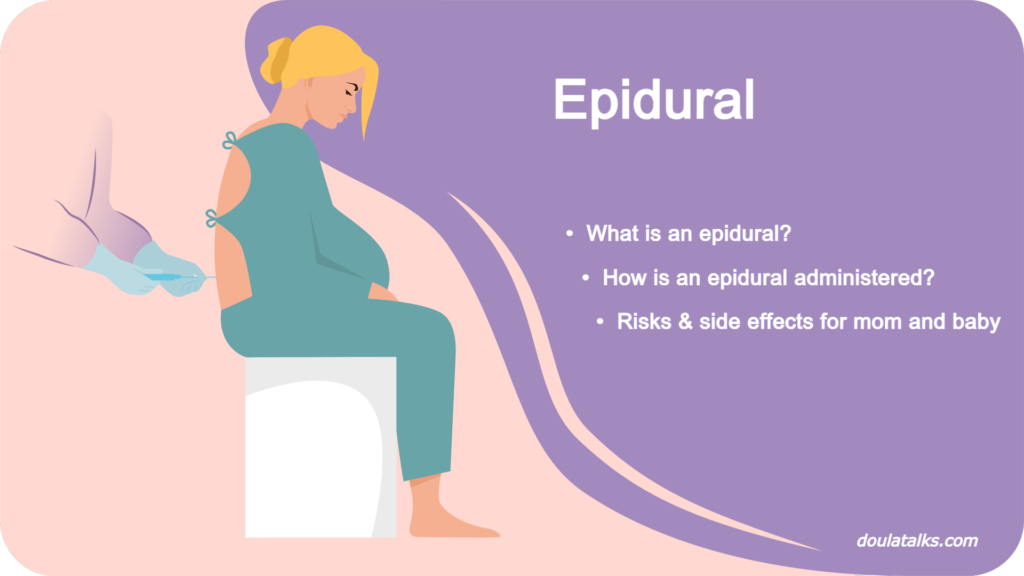
Epidural: What It Is, Procedure, Risks & Side Effects Read More »
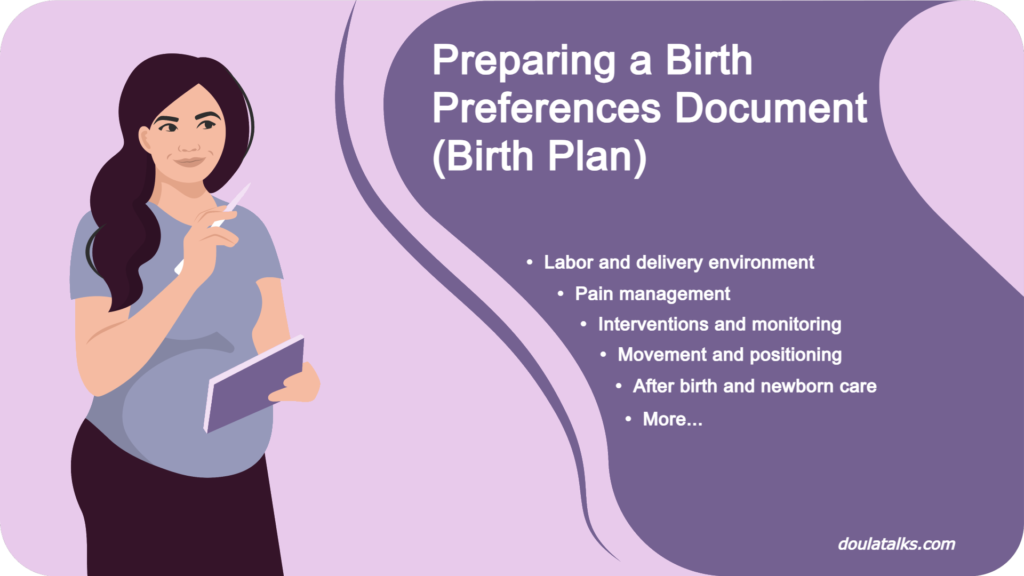
Preparing a Birth Preferences Document (Birth Plan)

Pregnant woman preparing a birth preferences document (birth plan)

Knowing When It’s Time: When to Head to the Hospital for Labor Epidural: What It Is, Procedure, Risks & Side Effects I’m a Doula: This Is What a Doula Does Pain Management During Labor Pitocin: What It Is, Procedure, Risks & Side Effects Induced Labor Rupture Of Membranes (Water Breaking) Natural Ways to Manage Labor Contractions Preparing a Birth Preferences Document (Birth Plan) By Liat Salomon, doula February 27, 2024 Share on In This Article: What is a birth preferences document? My birth preferences template Preparing for birth involves knowing what you want to experience as you are bringing your child into this world. While it is your healthcare provider’s job to deliver the baby safely into the world and keep you healthy, that doesn’t mean you don’t have some control over the process. Let’s dive into preparing a birth preferences document, aka birth plan. What is a birth preferences document? Most of my clients ask me to help write a “birth plan”, and I insist that we can’t plan births, so I prefer calling it a preferences document. A preferences document outlines your preferences for labor, delivery, and postpartum care. It’s a way to communicate your wishes and goals to your medical team and can help initiate discussions with healthcare professionals to ensure that the parent’s wishes are considered to its possible extent. I recommend that you complete this document by 38 weeks, print a couple of copies, and put it in your birth bag. A preferences document may include your expectations and desires for things like: ● Labor and delivery environment: Choices about where you want to give birth (hospital, birthing center, home), who you want present during labor, and any desired atmosphere or comfort measures. ● Pain management: Preferences for pain relief methods such as epidurals, nitrous oxide, or natural pain management techniques like breathing exercises, meditation, or movement. ● Interventions: Your stance on medical interventions like induction, assisted delivery (forceps or vacuum extraction), and cesarean section. ● Monitoring: How you wish to be monitored during labor, such as intermittent fetal monitoring or continuous monitoring. ● Movement and positioning: Preferences for being able to move around, change positions, or use birthing props like birthing balls or squat bars. ● Delivery positions: Desired positions for pushing and delivery, such as squatting, kneeling, or lying down. ● Immediate postpartum care: Preferences for skin-to-skin contact, delayed cord clamping, and other procedures immediately after birth. ● Feeding choices: Plans for breastfeeding, formula feeding, or a combination of both. ● Circumstances and backup plans: Considerations for unexpected situations or complications that might arise during labor and delivery. ● Postpartum care: Preferences for rooming-in with the baby, postpartum pain management, and any special requests during the recovery period. You may think of a preferences document as a guideline or map. You can include anything about labor and birth that is important to you.Remember that flexibility is key, as circumstances during labor can change rapidly. While a preferences document can serve as a helpful communication tool, being open to adjustments and changes based on medical advice and the well-being of both the mother and the baby is important. It’s a good idea to discuss your preferences document with your healthcare provider before going into labor to ensure that your choices are understood and met. Also Read: I’m a doula: this is what a doula does Knowing when it’s time: when to head to the hospital for labor My birth preferences template Here is the birth preferences template that I use with my clients. I added some suggestions under each category to give you an idea about what you can request. I ask them to go over it and fill it out according to their needs and specifications, and then we go over it together. At the start of the birth, they provide this document to the medical team. Partner Doula Other support person Hospital admittance/triage If available, I’d like a room with a bathtub. During the initial wireless monitoring, I’d like to stand or sit on a ball (not lie down). Pain management Do not offer pain medication, I will ask if I want it. I will want access to nitrous when I’m ready and will ask for it. I would like to shower/bathe to help with pain management. Do not offer fentanyl or any IV pain medicine (opioids). Environment I’d like to dim the lights and keep the room as quiet as possible, with as few people as possible coming in and out. I will have a Bluetooth speaker that I will provide to play music. Food and fluids I’d like to avoid the use of IV fluids and prefer to keep myself hydrated. I would like to eat lightly during labor. During labor and birth Please direct most questions to my partner. I would like intermittent monitoring of the baby. I’d like the option to move around and change positions. I’d like to avoid the use of Pitocin (except for placenta delivery). I would like to allow my bag of water to break spontaneously. I’d like the option to push in a position other than flat on my back. I would like to have a mirror available during pushing. I’d like a warm compress on my perineum when pushing. After birth and newborn care Delay cord clamping for 3 minutes. My partner would be thrilled to help with delivery, would like to see the placenta, and would like to cut the cord if that is an option. No circumcision We’d like the baby to be placed on mom’s chest right after delivery. No bottle feeding; mom will be breastfeeding. I would like to give the placenta the chance to detach spontaneously, up to 20-25 minutes after the baby is born (i.e., no traction/tugging on the cord during that time). The baby should receive: Vitamin K, Erythromycin ointment, and Hep B vaccination. If the baby needs to be taken from the room, I would like dad to accompany the baby at all times.

Preparing a Birth Preferences Document (Birth Plan) Read More »