The discussion around the use of pain medication during labor tends to be an emotional one. Some women feel it is important for them to give birth more ‘naturally’, i.e. unmedicated, and may feel that they are giving up and get disappointed in themselves if they end up asking for pain medication. I personally feel that pain medications are simply tools and that the decision to use or not use them should be made after considering and reviewing all the subjective information in real time, during labor. I also think women should feel free to change their minds during labor (in either way) without being judged or criticized.r:
Nitrous oxide (laughing gas)
Nitrous oxide, also known as laughing gas, is a gas that is inhaled through a mask. When inhaled, nitrous oxide can help to reduce the sensation of pain and anxiety, making it a popular option for women who want to avoid more invasive pain management options, such as an epidural. Nitrous oxide can also help to increase feelings of relaxation and reduce the intensity of perceived pain. Some women may find that it provides only partial relief and may need additional pain management options.
Subtitle_H3
A doula can help advocate for the mother’s wishes and preferences during childbirth, helping to ensure that the mother’s voice is heard and her needs are met. Personally, I feel that my job is to make sure that the birthing person and their partner advocate for themselves by encouraging them to ask A LOT of questions during pregnancy and during the birth — to make sure they always make the right decisions and that their “voice” is heard.
Subtitle_H3
A doula can help advocate for the mother’s wishes and preferences during childbirth, helping to ensure that the mother’s voice is heard and her needs are met. Personally, I feel that my job is to make sure that the birthing person and their partner advocate for themselves by encouraging them to ask A LOT of questions during pregnancy and during the birth — to make sure they always make the right decisions and that their “voice” is heard.
Subtitle_H3
A doula can help advocate for the mother’s wishes and preferences during childbirth, helping to ensure that the mother’s voice is heard and her needs are met. Personally, I feel that my job is to make sure that the birthing person and their partner advocate for themselves by encouraging them to ask A LOT of questions during pregnancy and during the birth — to make sure they always make the right decisions and that their “voice” is heard.
Fentanyl (sometimes referred to as “IV medication”, without naming the medication itself) is often offered during labor, and is administered through an IV. Fentanyl can help reduce pain, but can also cause drowsiness, nausea, and respiratory depression in both the mother and baby.
Subtitle_H3
A doula can help advocate for the mother’s wishes and preferences during childbirth, helping to ensure that the mother’s voice is heard and her needs are met. Personally, I feel that my job is to make sure that the birthing person and their partner advocate for themselves by encouraging them to ask A LOT of questions during pregnancy and during the birth — to make sure they always make the right decisions and that their “voice” is heard.
Subtitle_H3
A doula can help advocate for the mother’s wishes and preferences during childbirth, helping to ensure that the mother’s voice is heard and her needs are met. Personally, I feel that my job is to make sure that the birthing person and their partner advocate for themselves by encouraging them to ask A LOT of questions during pregnancy and during the birth — to make sure they always make the right decisions and that their “voice” is heard.
Epidural anesthesia
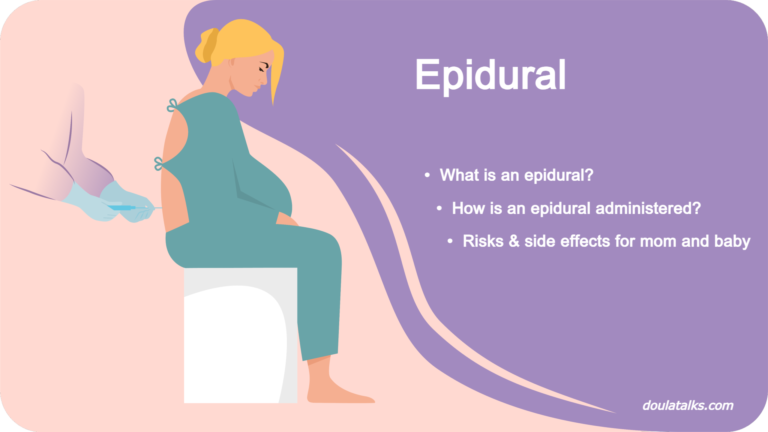
This is a common pain relief option that involves the insertion of a small catheter into the epidural space in the lower back. A local anesthetic and sometimes a narcotic are then administered through the catheter to numb the lower half of the body, including the uterus and birth canal. An epidural is typically very effective at relieving pain, but it may also have side effects, such as decreased blood pressure, headaches, and shivering. In rare cases, an epidural may cause more serious complications, such as infection or nerve damage. It is important to know that use of an epidural may decrease the frequency of contractions, causing them to occur at wider intervals after it is administered. This usually happens if an epidural is used in early labor, and rarely during active labor (5-6 CM). If the problem of contraction infrequency persists, your provider will typically suggest adding Pitocin. After getting an epidural you will stay in bed until giving birth, but in most cases you can still change positions while being in bed to continue promoting and advancing toward a vaginal birth. (for a more in-depth look at epidurals, check out my article “Epidural: what it is, procedure, risks & side effects”).
Conclusion
The decision to use pain medication during labor is personal, and, if requested, the different medications should be used in different stages of labor. I feel that, when possible, a natural birth is a practical decision, because of the many advantages it has (usually shorter, healthier birth, shorter pushing stage, less tearing, easier recovery, impact on nursing, diminished likelihood or severity postpartum depression) – but an epidural should not be considered “a devil”. It is a tool, and like any tool, with proper knowledge, it can be used safely and effectively.
On a personal note, I wish you a wonderful and happy birth!
Questions?
If you have any questions about this topic/article, please feel free to contact me through email at: liat@doulatalks.com
Liat Salomon is a certified doula since 2010 and is working in the San Francisco Bay Area in California. She has assisted in hundreds of births and has extensive experience with VBAC.